Nithya Raman’s Black Agenda follows coalition push; Bass also responds

LOS ANGELES — Nithya Raman’s Black Agenda is the mayoral candidate’s answer to a policy challenge from the L.A. Black Agenda Coalition, a group of Black community organizations that also secured a written response from Mayor Karen Bass.
Where the L.A. Black Agenda came from
The community-led effort preceded the candidates’ responses. The Wave reported Oct. 15 that organizers had developed an eight-page proposal covering 10 priorities, including housing, homelessness, jobs, Black-owned businesses, public safety and preservation of historically Black neighborhoods.
The coalition includes Los Angeles Metropolitan Churches, the National Action Network, Los Angeles Urban Policy Roundtable and Project Islamic HOPE, according to The Wave. Its proposal grew from concerns about economic opportunity, displacement and unequal city services, including barriers facing Black-owned businesses and the preservation of historically Black neighborhoods.
Organizers asked both campaigns to respond by Oct. 23 with funding sources, deadlines and measurable results for the next mayoral term through 2030. They sought commitments for the first 100 days, first year and full term, followed by annual public reporting. The coalition said it was not endorsing either candidate.

Explore Raman’s Black Agenda
What is promised. What would it take?
Select a topic to explore the policy, the timeline and the questions that remain about resources and results.
These are campaign commitments. The notes below identify measures for future reporting; they do not grade delivered results.
Housing, renters and homeownershipBlack Agenda + broader citywide housing plan
The pledge. Build more housing in wealthier neighborhoods, strengthen tenant protections and advocate for state support for first-time Black homebuyers. Raman also proposes working with Black residents and community organizations to advance the city’s reparations recommendations.
Related citywide proposals. Her housing platform proposes approval deadlines of 60 days or less for zoning-compliant projects and 120 days or less for discretionary projects, early coordination across departments and one inspector following a project through construction.
It also proposes separate sales of accessory dwelling units, simpler condominium approvals, changes to state condominium liability rules, a single annual affordable-housing funding window and publicly owned, permanently affordable housing on city land. These are broader citywide proposals supplying detail behind the Black Agenda.
What to watch: The platform does not set a numerical Black homeownership target. Adoption, funding and completed homes would determine the effect of the proposed changes.
Homelessness and lasting housingA citywide 2028 target · Black-specific results still to measure
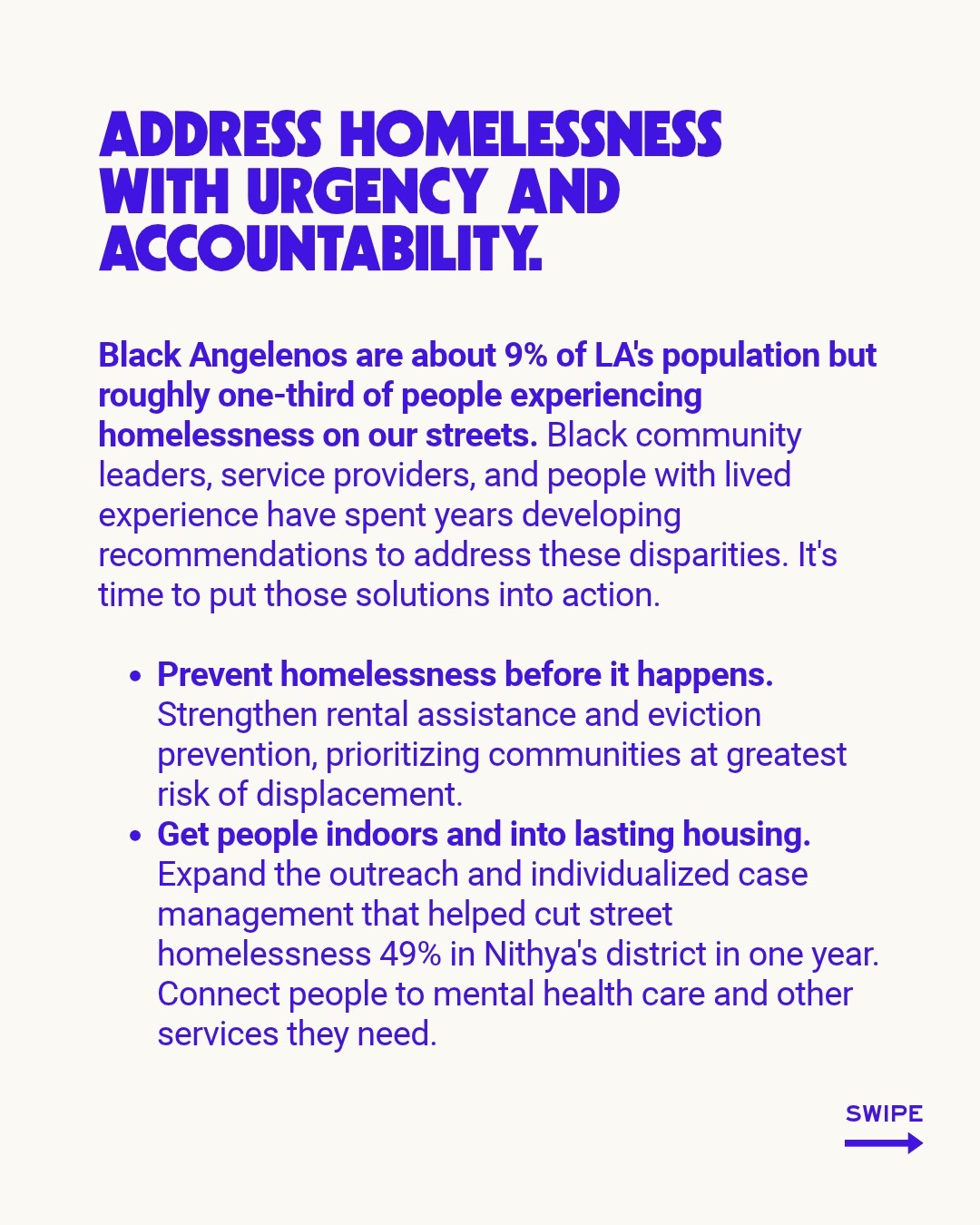
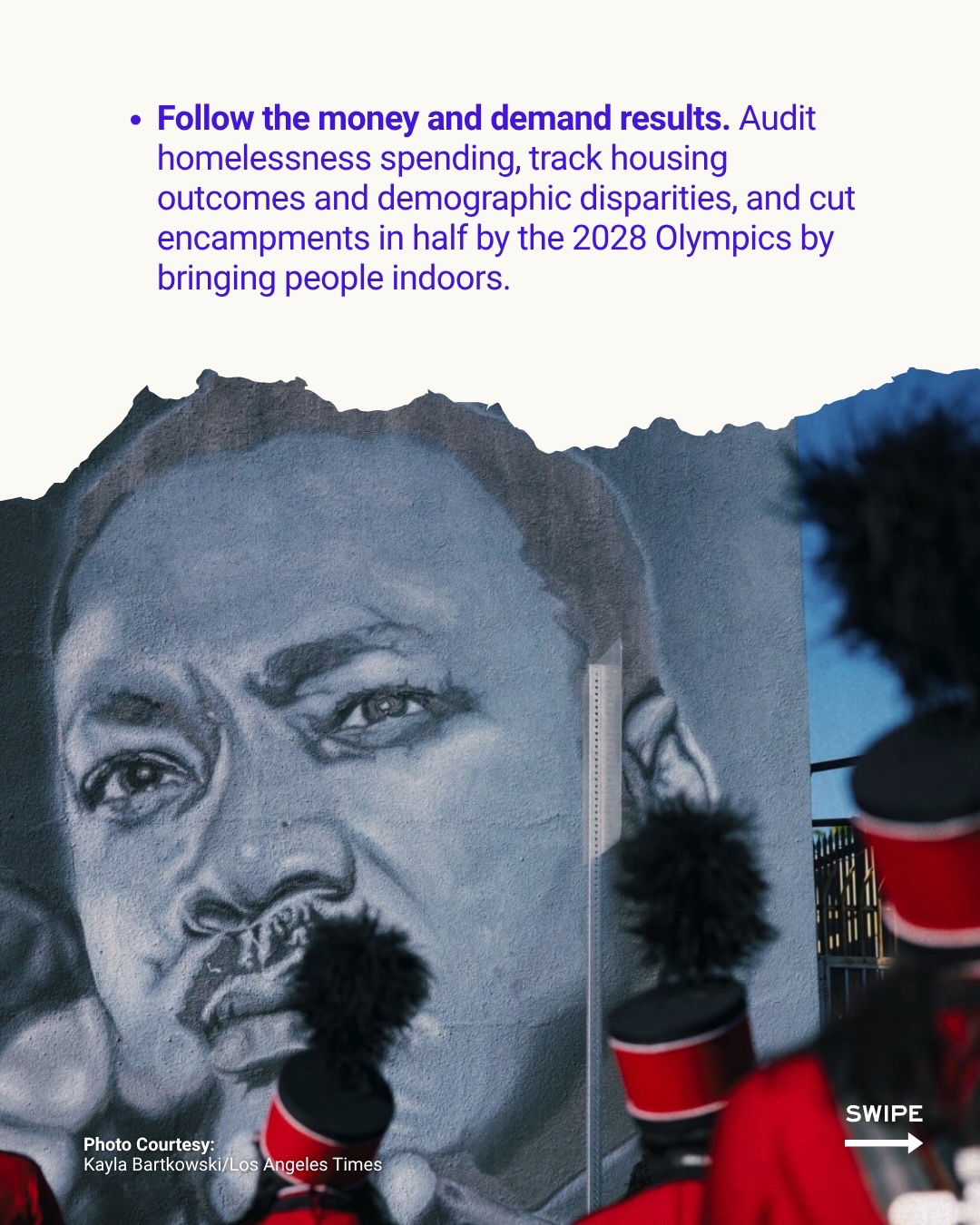
The pledge. Strengthen rental assistance and eviction prevention, expand outreach and case management, and connect people with housing, mental health care and other services. The agenda calls for audits of homelessness spending and tracking of housing outcomes and demographic disparities.
The timeline. Raman’s broader homelessness platform promises to reduce the number of people sleeping in tents and encampments by at least half by the 2028 Olympics.
What to watch: That is a citywide target. A specified reduction in Black homelessness and a clear account of lasting housing placements would allow Black residents to assess their community’s outcomes.
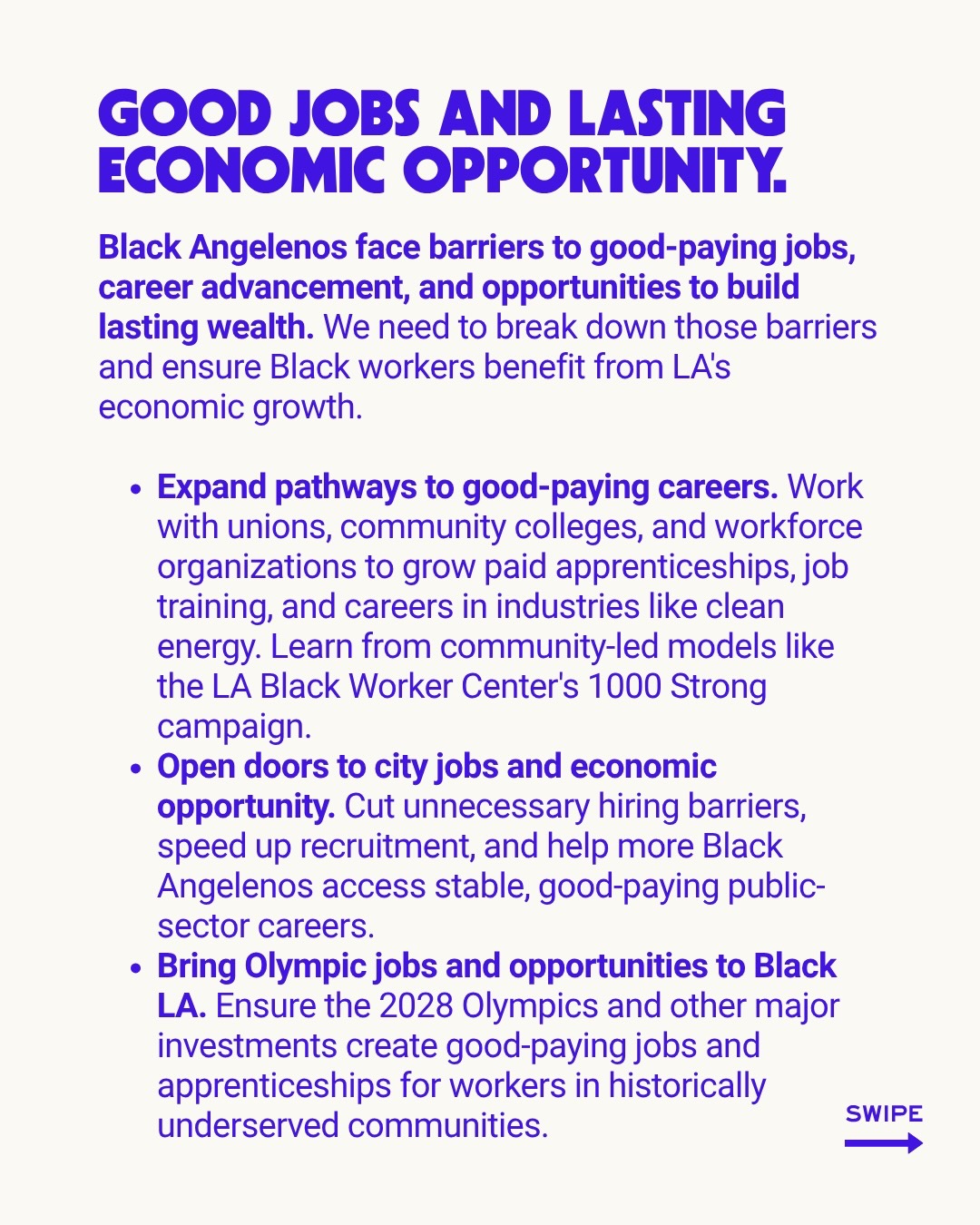
Jobs, apprenticeships and public-sector careersPaid training · faster hiring · Olympic opportunities
The pledge. Work with unions, community colleges and workforce organizations to expand paid apprenticeships, training and careers, including in clean energy. Cut unnecessary hiring barriers and speed public-sector recruitment.
The model cited. The platform references the LA Black Worker Center’s community-led 1000 Strong campaign. It also calls for Olympic investments to create good-paying jobs and apprenticeships in historically underserved communities.
What to watch: Published hiring and apprenticeship targets, dedicated funding and reporting on who receives the jobs would make these commitments measurable.
Black-owned businesses and city contractsTechnical help · permitting · protection from displacement
The pledge. Expand technical assistance for city contracting, remove barriers and publicly track results. Support firms disrupted by major capital projects and connect Olympic investment with opportunities for Black-owned businesses and workers.
Related citywide proposals. Raman’s small-business platform proposes departmental response deadlines, permitting-fee refunds when deadlines are missed and one coordinator across agencies. It also includes help for vendors and home-kitchen operators, a commercial tenant anti-harassment ordinance, vacant-storefront pilots and a baseline of sanitation and streetlight services on commercial corridors.
What to watch: Contract dollars awarded, businesses assisted, permit turnaround times and resources committed would show whether access expands.
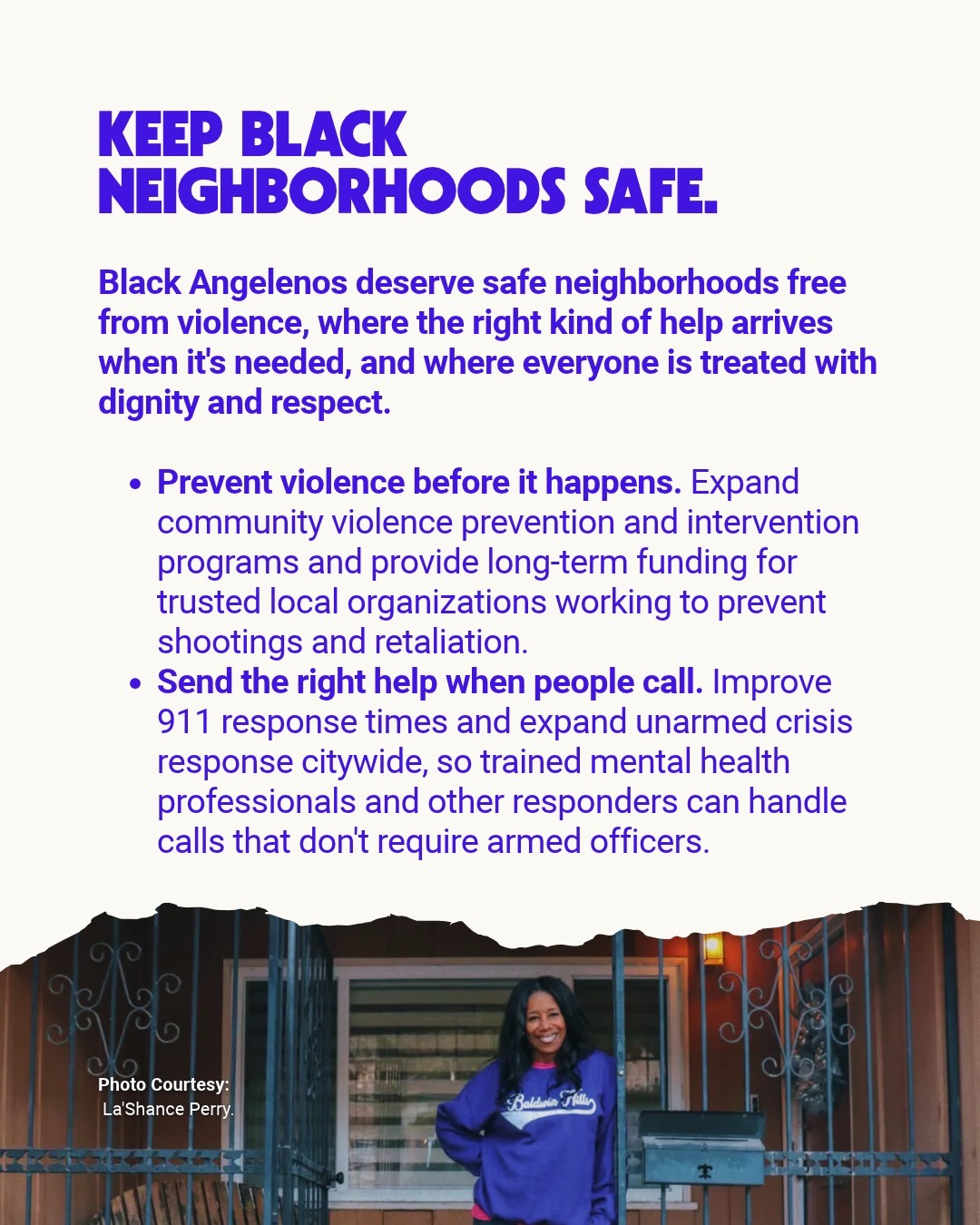
Neighborhood safety and police accountabilityCrisis response · violence prevention · reliable services
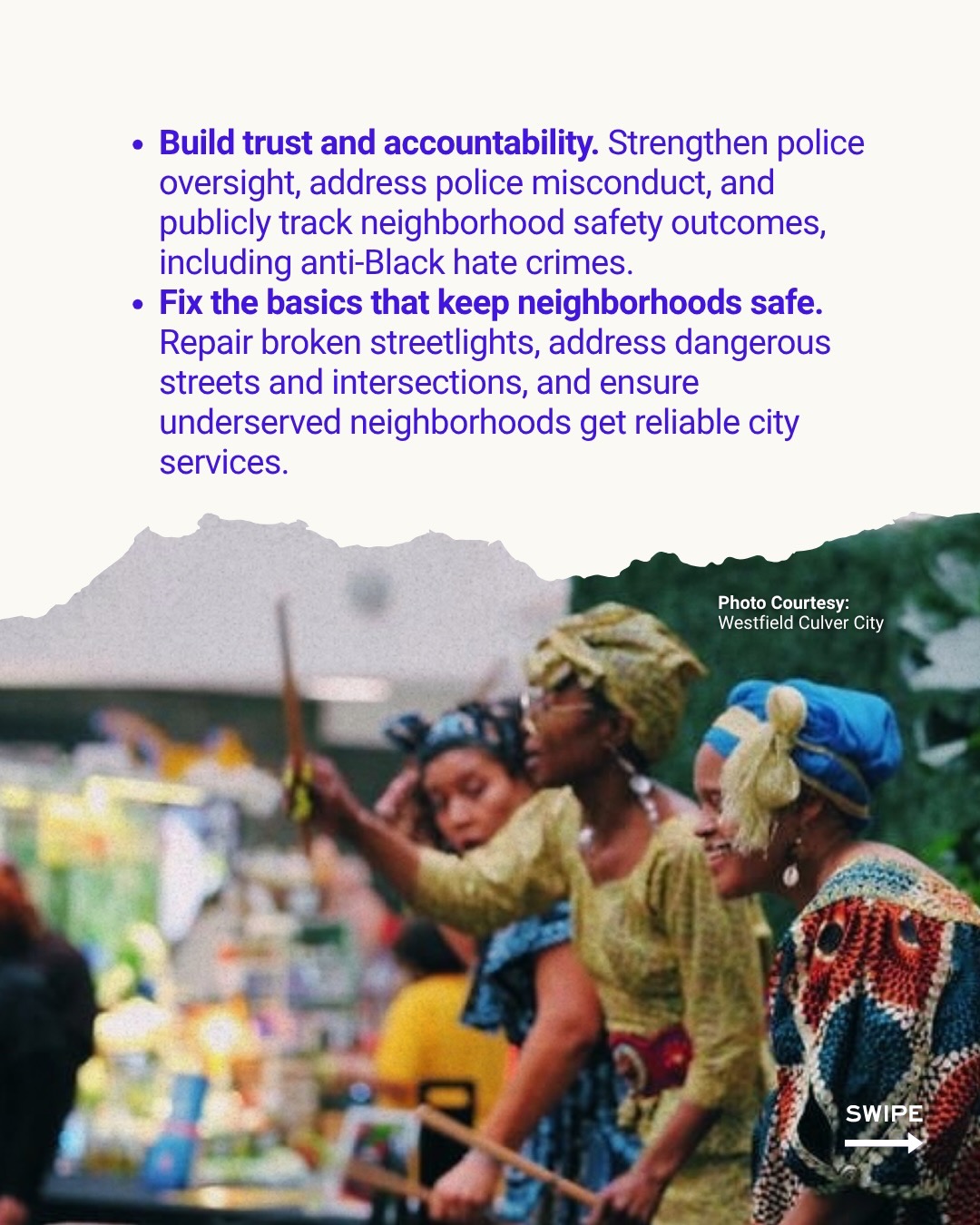
The pledge. Expand unarmed crisis response and community violence prevention, strengthen police oversight and track neighborhood safety outcomes, including anti-Black hate crimes.
Everyday services. The agenda also names streetlight repairs and safer streets and intersections as part of neighborhood safety.
What to watch: Funding, response times, service coverage and public reporting on safety and police conduct would provide ways to assess delivery.
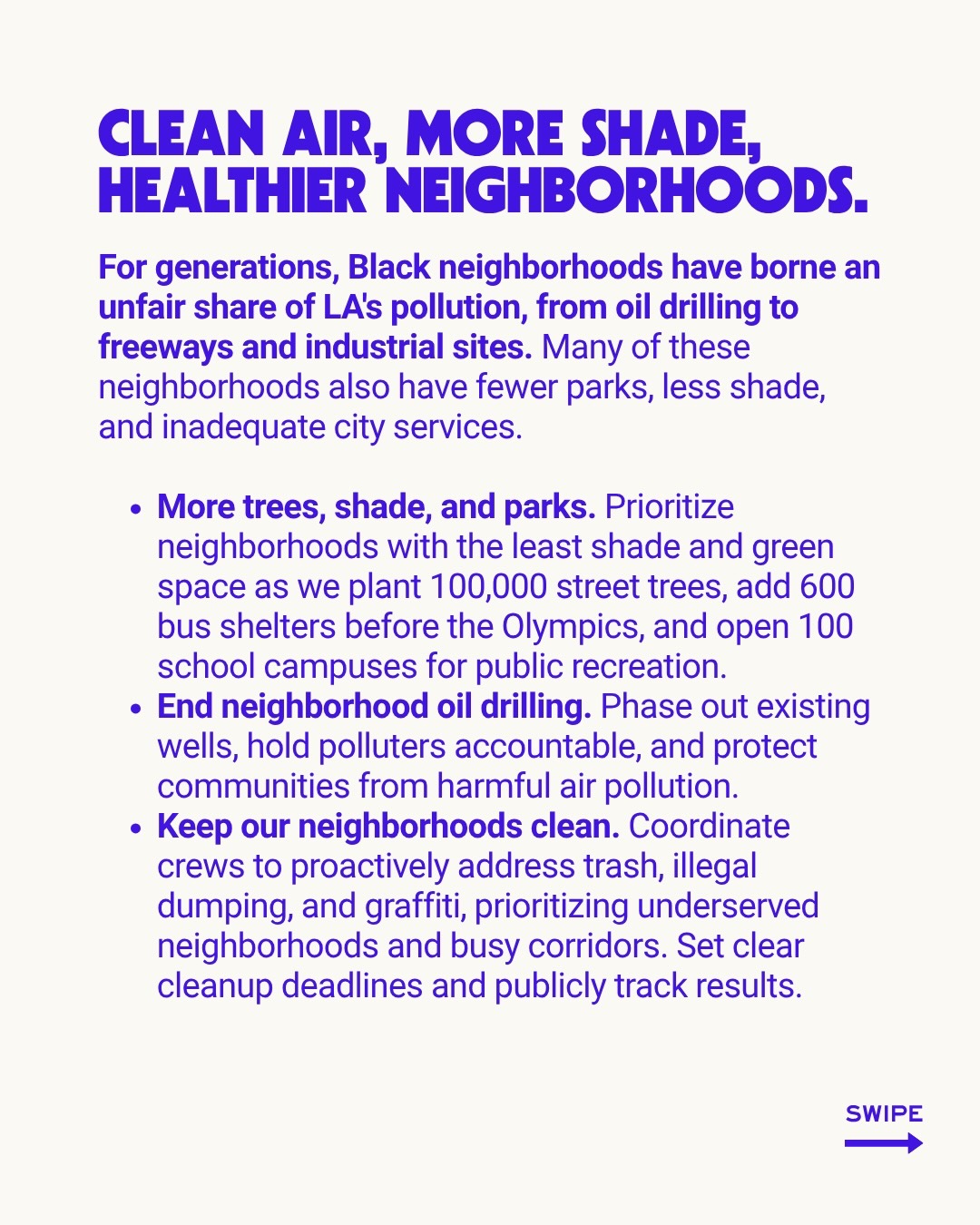
Cleaner air, shade and healthier neighborhoodsEnvironmental justice · street trees · public recreation
The pledge. Prioritize neighborhoods with the least shade and green space, phase out neighborhood oil drilling and coordinate trash, illegal-dumping and graffiti cleanups with public tracking.
Numbers in the campaign agenda. It names 100,000 street trees, 600 bus shelters before the Olympics and 100 school campuses opened for public recreation.
What to watch: Neighborhood allocations, budgets, installation schedules and completed work would show how those citywide promises reach Black communities.
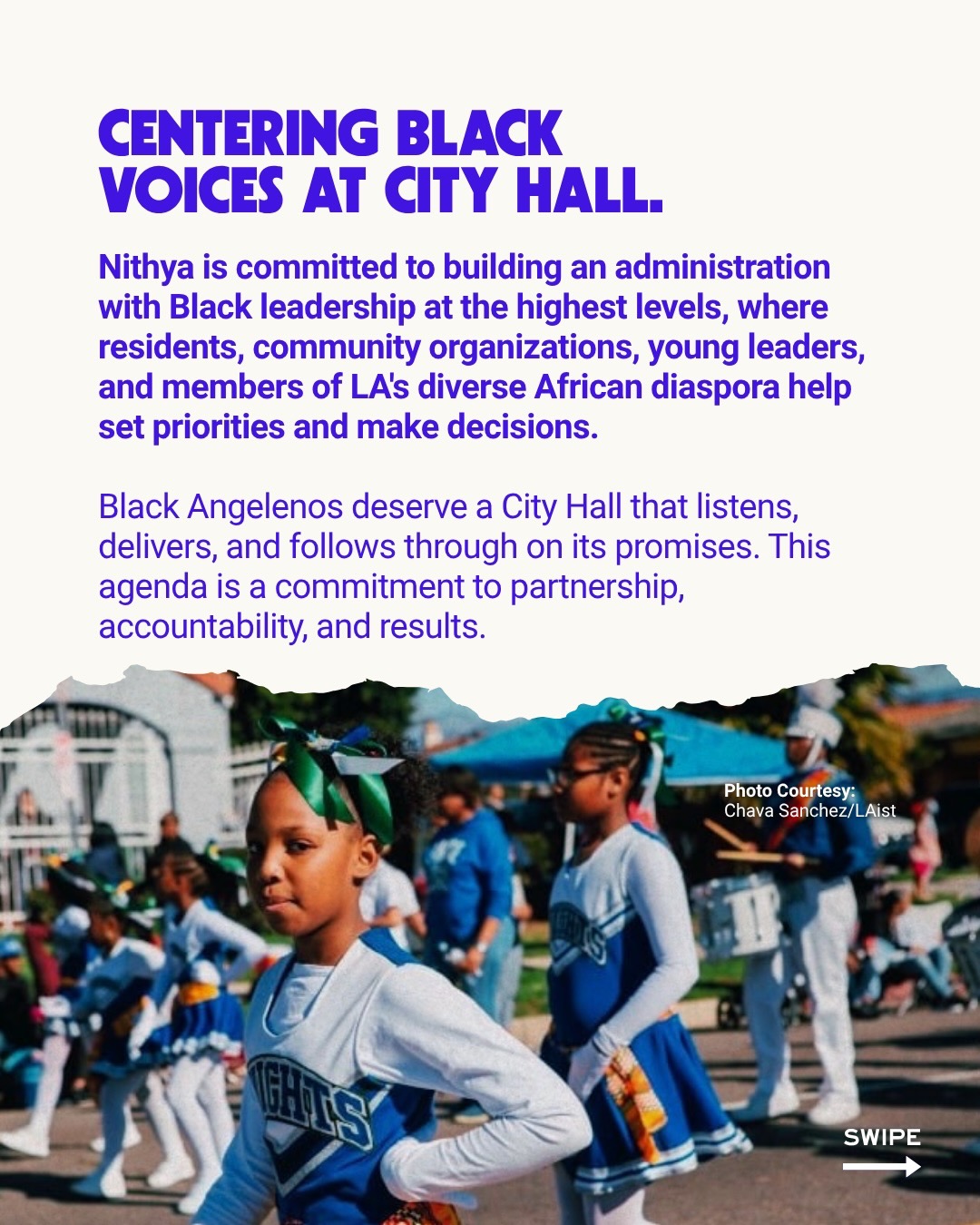
Black leadership and a voice at City HallSenior administration roles · community participation
The pledge. Build an administration with Black leadership at its highest levels and include residents, community organizations, young leaders and members of LA’s African diaspora in setting priorities.
What to watch: Appointments, public participation channels and documented follow-through would show how the promise translates into decision-making power.
Sources: Raman’s Black Agenda and linked citywide policy platforms. Her campaign agenda is distinct from the L.A. Black Agenda Coalition’s original demands and Bass’s separate response.
Bass also answered the coalition
The Wave reported Oct. 28 that Bass submitted a six-page letter and Raman published a nine-page Black Agenda. The coalition’s original demands and the two campaign responses are distinct documents.
Bass’s response emphasized her administration’s record and future housing and economic commitments. She pledged an annual Black L.A. Report Card beginning in December 2027 and an end to major homeless encampments by 2030. She also outlined homeownership initiatives and opportunities for workers and Black-owned businesses.
The Wave reported that neither candidate provided specific numerical targets for reducing Black homelessness or increasing Black homeownership by 2030. Bass’s campaign said targets require reliable data, funding and implementation capacity. These are commitments to assess against future budgets and results.

How to measure the commitments
The Wave reported that Raman’s published platform does not comprehensively allocate funding or commit to an annual Black-specific report card. Those gaps leave voters with questions about implementation. Households served, contracts awarded, people hired and resources committed would provide concrete measures of progress.
For Black Los Angeles, the agenda creates a basis for comparing promises with eventual budgets and results. Its reach extends from housing and work to neighborhood services, but the scale of its benefit will depend on decisions and funding that would follow the election.
View the campaign’s 10 Black Agenda graphics
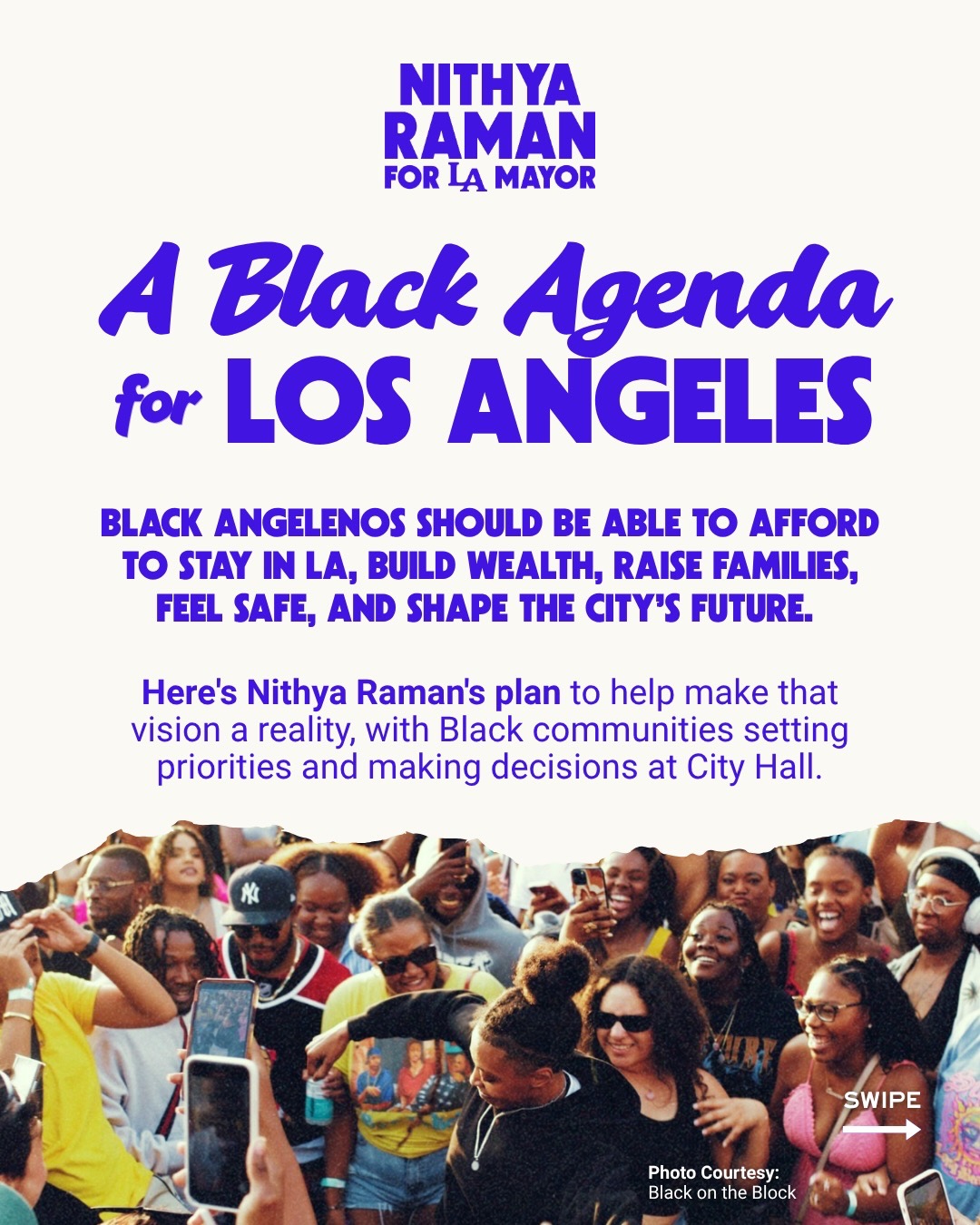
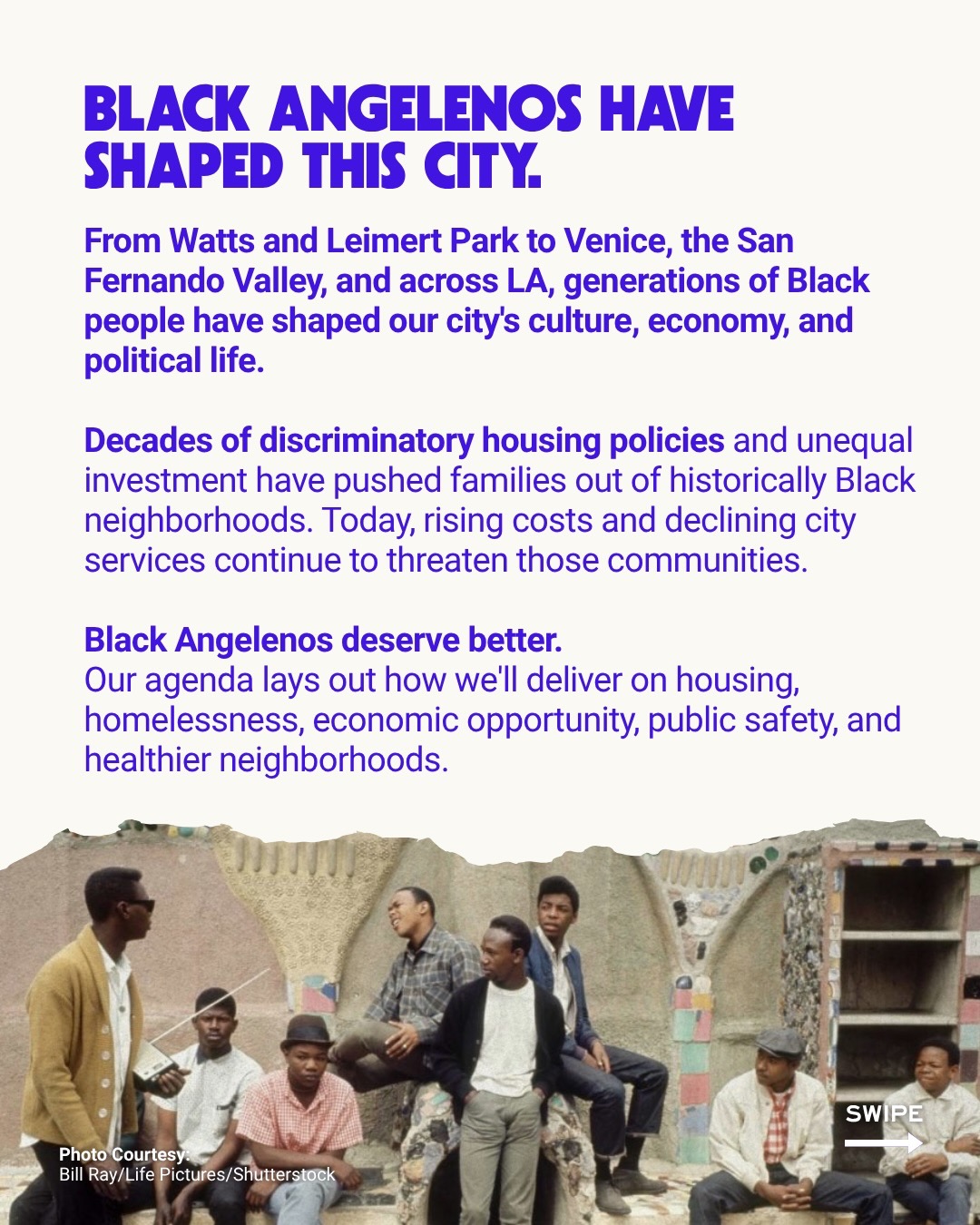
Black Agenda graphics from Raman’s campaign
Graphics courtesy of the Nithya Raman for Mayor campaign. These slides present the campaign’s proposals; original photograph credits are retained below. Select an image to view it at full size.